Bangkok Terminal Logistics Co., Ltd.



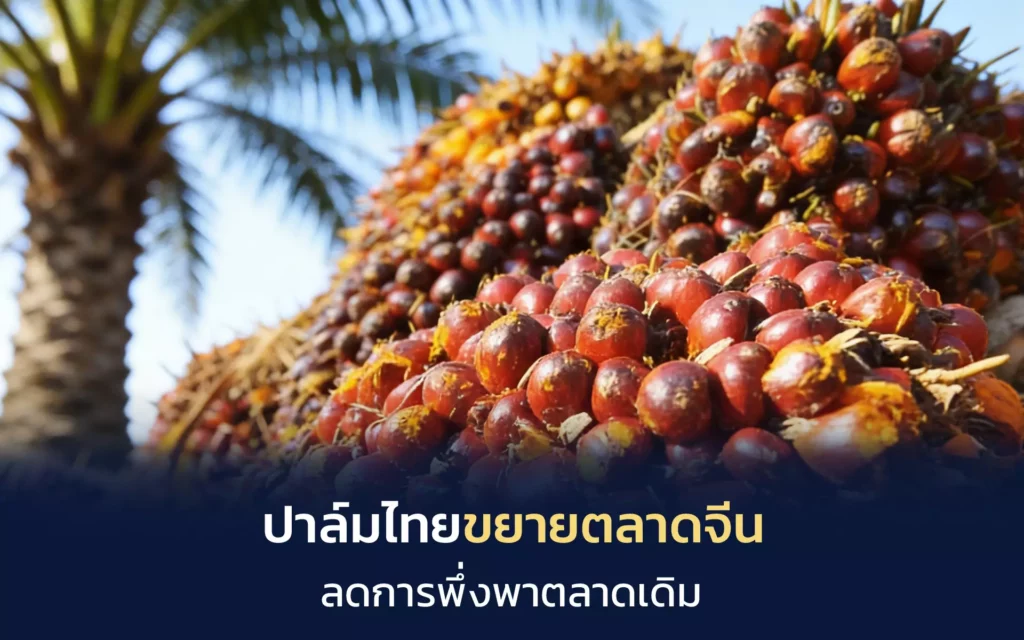
Thai palm oil companies expand their market into China, reducing their dependence on traditional markets.
The Chinese market shows a continuously increasing demand for palm oil, especially in the food industry. This reflects economic and population growth, as well as consumer behavior seeking high-quality products at value-for-money prices. As a result, Thai palm oil, with its competitive production costs and diverse processing capabilities, has greater opportunities to expand exports to the Chinese market.
Data from the American Oil Chemists’ Society indicates that China is the world’s largest consumer of vegetable oil and the third largest consumer of palm oil, accounting for 5.36% after Indonesia and India. Palm oil consumption in China accounts for 18% of the country’s total vegetable oil consumption.
This trend presents opportunities for Thailand to expand into new export markets and reduce its dependence on its main market, India, which currently accounts for more than 77% of all Thai palm oil exports. Key supporting factors include Thailand’s price competitiveness compared to other vegetable oils such as soybean oil, as well as China’s policy of diversifying import sources to reduce supply chain risks.
Strategically, Thailand’s palm oil exports should focus on developing specialized products to add value, such as refined palm oil, organic oil, bio-based products, as well as palm oil for the bakery industry, non-dairy creamer, and trans-fat-free products, to meet the health trends of Chinese consumers.
Meanwhile, proactive marketing through digital channels such as Chinese e-commerce platforms and social media will help build quality awareness and reach B2B buyers, especially in high-growth potential secondary cities. Furthermore, leveraging trade agreements such as RCEP and the ASEAN-China Free Trade Agreement will enhance price and tariff competitiveness.
Furthermore, the Chinese market places great importance on high-standard and traceable products. Thai palm oil therefore has an advantage in terms of quality, standards, and sustainability potential. Upgrading production to meet RSPO standards will build consumer confidence and support long-term market expansion.
Overall, China’s increasing demand for palm oil, coupled with Thailand’s stable and continuous supply potential, presents a significant opportunity to enhance Thailand’s role in the global palm oil market, create added value for the industry, and reduce the risks associated with dependence on only a few existing markets.
Source: Bangkok Business Online