Bangkok Terminal Logistics Co., Ltd.



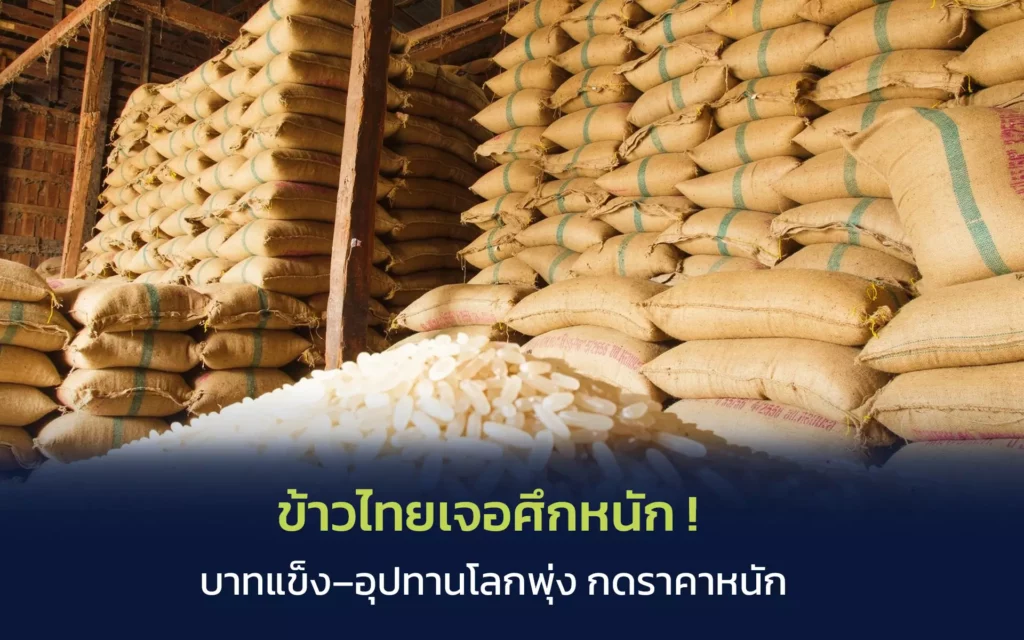
Thai rice faces a tough challenge! Strong baht and surging global supply are putting heavy pressure on prices.
Thai rice exports in January 2026 totaled 530,287 tons, a decrease from the same period last year which saw exports of 643,144 tons, or a contraction of 17.5%.
Export value stood at 9,707 million baht, a decrease of 30.7%, or 313 million US dollars, a decrease of 23.9%, reflecting price pressure from the global market and increased competition.
KEY POINTS
- In January 2026, Thai rice exports decreased by 17.5% in volume and by 30.7% in value compared to the same period of the previous year.
- The export target for 2026 is set at 7.03 million tons, the lowest in 5 years.
- The strengthening Thai baht and increased global rice supply are putting pressure on Thailand’s competitiveness.
Export target for 2026 is the lowest in 5 years.
The export target for 2026 is set at 7.03 million tons, a decrease of approximately 11% from the previous year, valued at 130 billion baht or approximately 4 billion US dollars.
This represents the lowest level in five years, since 2021, with plans to reassess the situation in the second half of the year to consider adjusting the target if necessary.
The strengthening Thai baht is putting pressure on Thai rice prices.
One of the key factors is the appreciation of the Thai baht, which has resulted in Thai rice being more expensive than its competitors.
- A competitive exchange rate should be around 33–34 baht per US dollar.
- Currently, the exchange rate is approximately 31 baht per US dollar.
Every 1 baht appreciation increases the price of Thai rice by approximately 12–15 dollars per ton.
Compared to the same period in 2025, the price of Thai rice has increased by about $40 per ton.
Global supply increased, with India setting a new record for production.
Global rice production has increased significantly, with major producing countries able to produce up to 152 million tons per year, surpassing China’s previous record of 145–146 million tons.
This makes the country the most influential exporter in global market prices.
Meanwhile, Vietnam and Pakistan also reported good yields in the latest season, resulting in global supply exceeding demand and intensifying price competition.
Domestic risk: Increased supply but difficulty competing.
Even though Thailand’s rice production volume is expected to increase in 2025, if exports cannot be accelerated, it could put pressure on domestic paddy rice prices.
Key areas that require urgent adjustment include:
- Developing high-yielding rice varieties.
- Reducing production costs
- Enhancing competitiveness in the global market.
The main factors affecting Thai rice exports.
1️⃣ Volatility in the Thai baht exchange rate.
2️⃣ Increased global rice supply from both exporters and importers.
3️⃣ US tariff measures that impact global trade.
4️⃣ Many countries have food security policies that emphasize domestic production and reducing imports.
5️⃣ Risks from El Niño and drought that could impact crop yields.
Overview of the global rice market for the 2025/26 marketing year.
Forecast data indicates that:
- Global rice production stood at 541.28 million tons of milled rice, a decrease of 0.07% from the previous year.
- Global rice trade (exports–imports) is expected to reach 62.76 million tons of milled rice, an increase of 5.1%.
Many major exporting countries are expected to increase their exports, while many major importing countries are also likely to increase their imports.
Source: Thansettakij