Bangkok Terminal Logistics Co., Ltd.



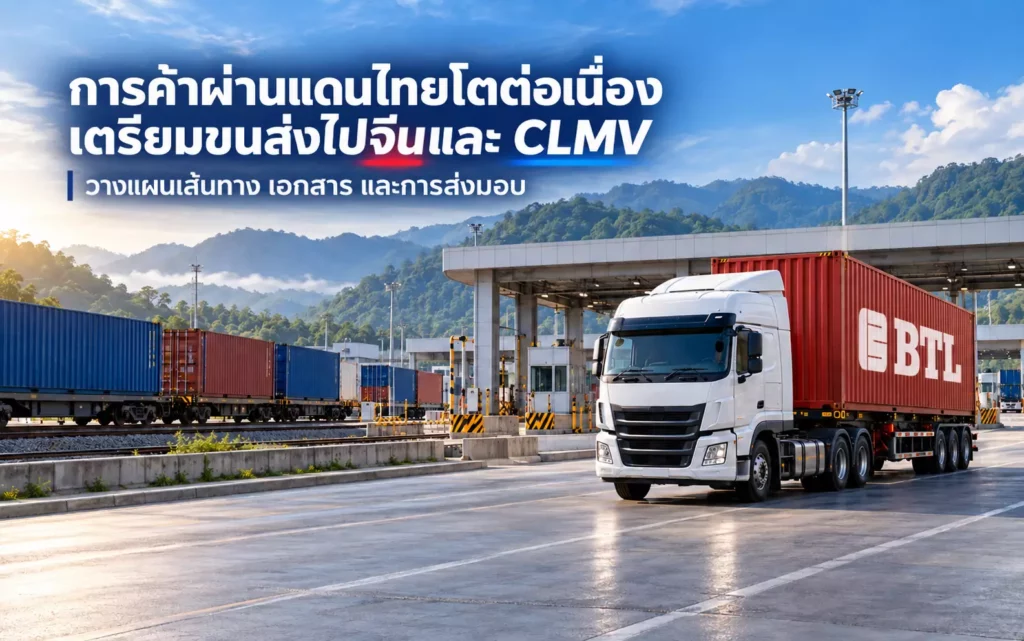
Cross-border trade grew by 34.2%: How should exporters plan their transportation to be prepared?
Thailand's border and transit trade in August 2026 grew by 34.2% compared to the same month of the previous year, signaling a need for exporters to monitor opportunities in neighboring countries and China. However, before accepting additional orders or expanding markets, the crucial question to answer is:
When will the goods reach the recipient? What is the total cost, and what preparations need to be made along the way?
For businesses planning to ship goods to China or the CLMV countries (Cambodia, Laos, Myanmar, and Vietnam), preparing information before requesting shipping quotes helps assess feasibility and clearly define delivery terms with business partners.
1. Start with the product and delivery date before choosing a delivery route.
Exporters should specify the type of goods, quantity, weight, packaging size, pickup and delivery points, and the recipient’s required delivery date, as well as any special conditions such as temperature control or protection against damage.
For example, fresh fruit and industrial parts might be shipped to the same city, but with different limitations. Fruit requires consideration of freshness and transit time, while parts delivered to a factory may need to arrive according to production cycles. This information should be used as a starting point for discussions with transportation providers like BTL to assess which mode of transport—road, rail, or multimodal—is most suitable for the task.
2. Please provide a price quote that shows the cost from start to finish.
A seemingly lower shipping price may encompass different service scopes. Before comparing quotes, check if the price includes pickup from the origin, customs clearance, transfer, and onward delivery to the recipient. Also, inquire about additional charges for waiting times for vehicles, documents, or temporary storage of goods.
For the Thailand–Laos–China route, it’s crucial to have a complete itinerary, detailing the goods’ transit points, transfers between coordinators or changes in transport methods, and who is responsible for each stage. Coordinating the transportation plan with customs from the outset, a key part of the BTL service, helps exporters understand the scope of work before agreeing on delivery schedules with clients.
3. Review the documents with your business partner before the goods loading date.
Ensure that the details of the goods, quantity, weight, and sender-recipient information match in relevant documents such as the invoice and packing list. Also, have the end-customer confirm their readiness to receive the goods and proceed with the import process.
Additional documents or licenses depend on the type of goods, the destination country, and the mode of transport. Therefore, it is advisable to submit this information to customs officials in advance, especially when exporting new types of goods or changing markets. This allows exporters time to coordinate with their trading partners if necessary corrections are found before the goods are loaded onto the truck.
4. Plan for changes and designate a coordinator.
Each market has different circumstances. Growth in trade value does not guarantee that all checkpoints or routes are equally operational. Therefore, it is advisable to check the checkpoint status, shipping schedules, holidays, and recipient readiness again before departure.
It should be agreed upon when the shipment will be tracked, who will provide updates, and how delays will be handled in case of them, such as adjusting the delivery date or evaluating alternative routes, considering both costs and the condition of the goods.
For collaboration with BTL, exporters can start by submitting product information, pickup and delivery points, and delivery schedules to discuss transportation plans and related customs procedures. This early collaboration ensures a clear plan for cross-border and transit shipments to CLMV countries and Southern China, helping businesses better prepare for trade opportunities.